A VISUAL SYMPHONY
My creative process begins not with an image, but with a reverberation, an echo of sound, a memory, an emotional trace. These are not concepts I translate into visual form, but impulses I move with. Like a composer transcribing an internal melody or a dancer improvising to a barely perceptible rhythm, I approach the blank page as a stage, not a surface. Each line is a gesture, each curve a rhythm, each void a breath in the choreography of my inner world.
Drawing, for me, is not merely illustration, it is a visceral conversation. A visual symphony. An intuitive dialogue between the body, memory, and emotion. As composer Philip Glass observed, music is like “an underground river… always flowing, but only perceptible when you’re listening.” In the same way, each drawing traces an invisible current of sound and feeling. Dense clusters of lines might echo the swell of an orchestral crescendo; sparse, rhythmic marks suggest a quiet pulse, like breath between phrases. These abstractions are not representations, they are records of emotional motion, capturing internal states: peace or dissonance, urgency or calm.
In this sense, my drawings map invisible forces. As choreographer Annie-B. Parson writes, one can “re-think choreography as dance on paper,” drawing graphic structures that become notations of motion and material. This approach is deeply influenced by my background in architecture, dance, and visual art. I move between disciplines, creating work that is spatial, musical, and embodied. Architecture teaches me structure; dance gives me rhythm; drawing becomes the intersection where they meet in an intuitive act of translation. The result is not a static image, but a temporal form; each drawing a journal of motion, emotion, and memory.
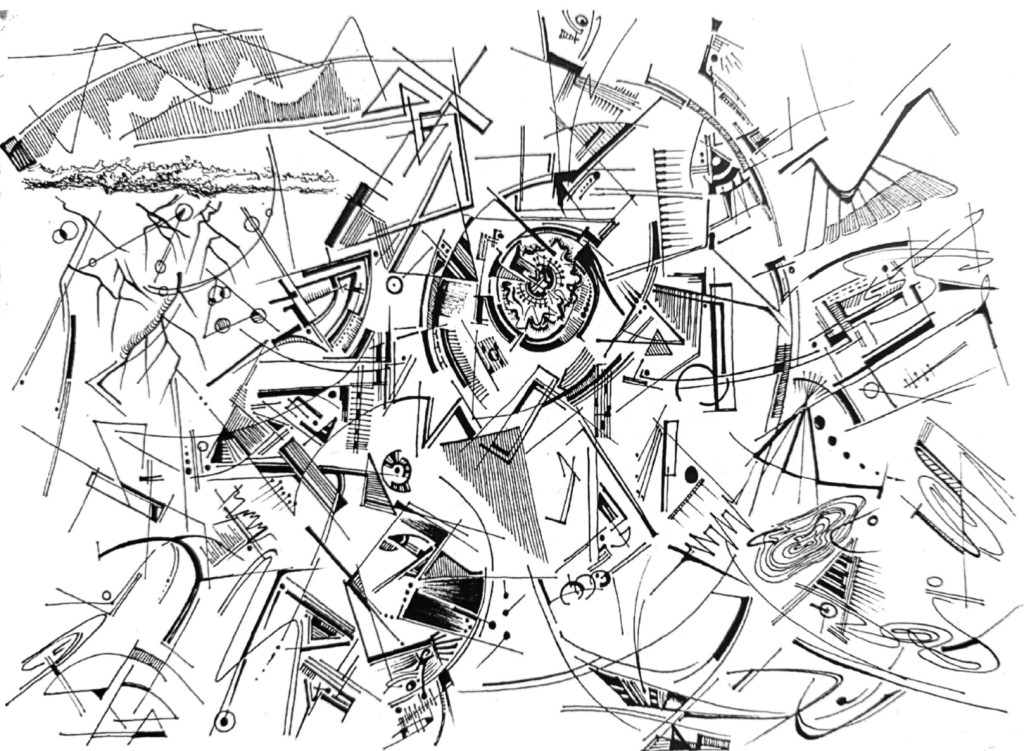
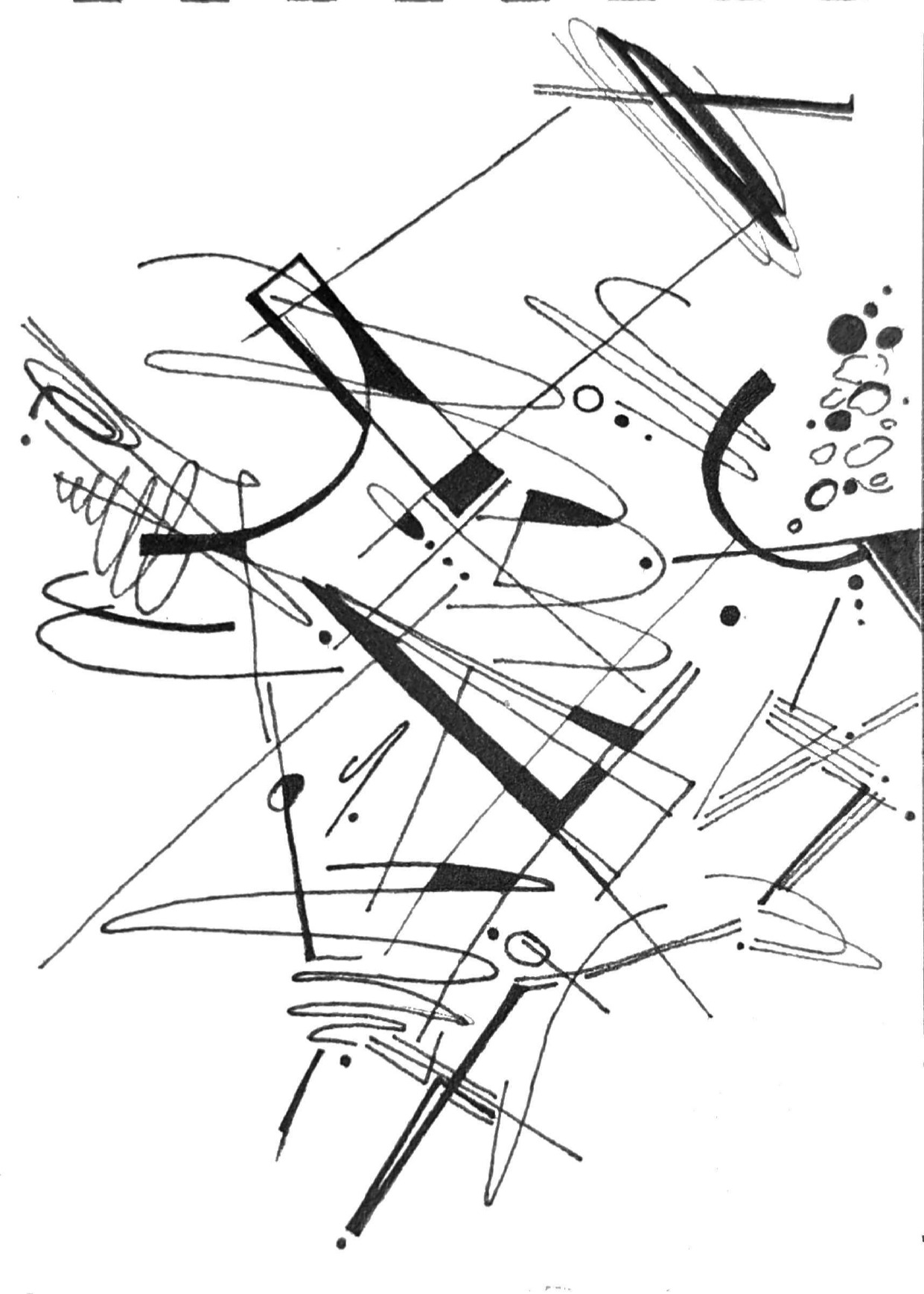
This state of “organized chaos,” as some describe both my work and personality, reflects a quiet discipline beneath the surface. What might appear erratic is actually finely attuned, an orchestration of sensory memory and structural precision. This harmony between intuition and control echoes Carl Jung’s insights on the unconscious, the way it speaks not through logic but through symbols, rhythms, and archetypal patterns. My drawings, in this way, become visual notations of inner experience, encoded with personal symbolism, yet open to collective interpretation.
Consider a specific work inspired by Ludovico Einaudi’s Walking. As the music unfolds; delicate, haunting, and unresolved, my hand responds. The drawing builds with sharp yet flowing black strokes: tight, angular tensions emerge in moments of musical intensity, then give way to softer, organic spirals as the piece relaxes into melody. Thick shading mirrors the depth of bass tones; open space evokes the held silence between notes. What results is not a depiction of the music, but a parallel embodiment, its emotional arc transposed into visual form. This is a kind of “dance on paper,” a still performance of something essentially alive.
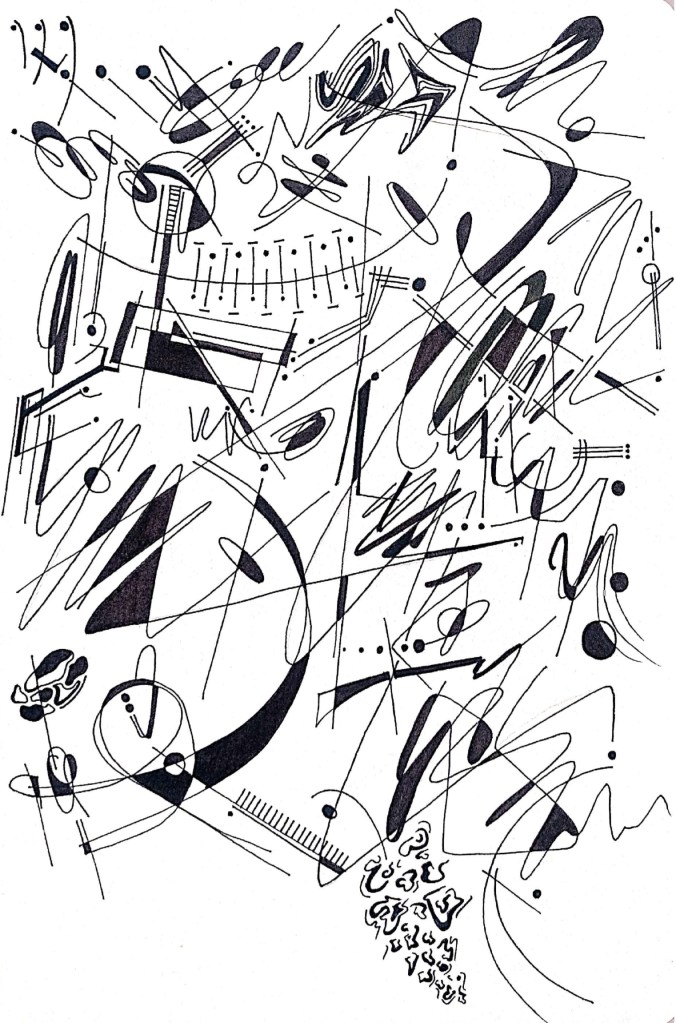
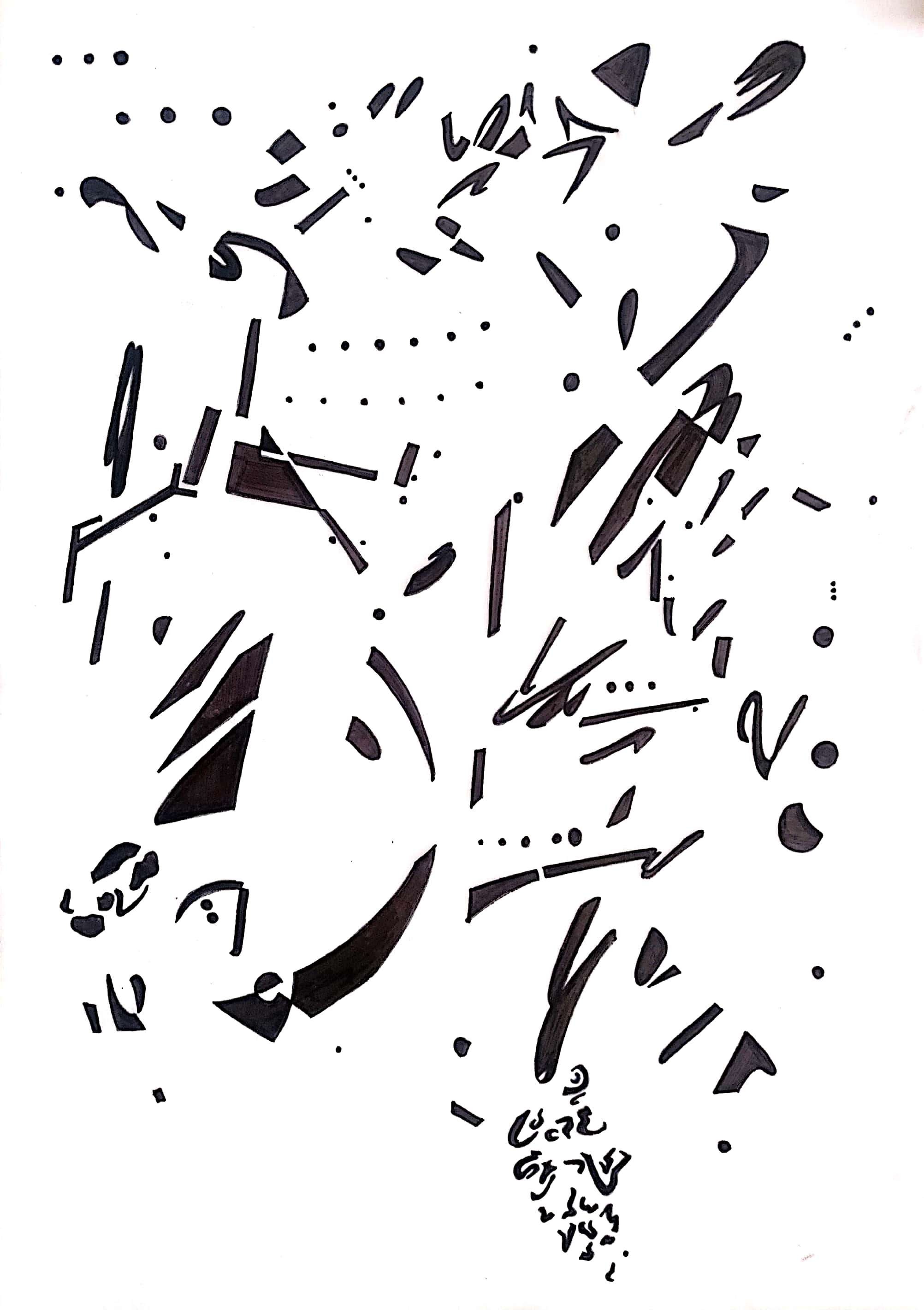
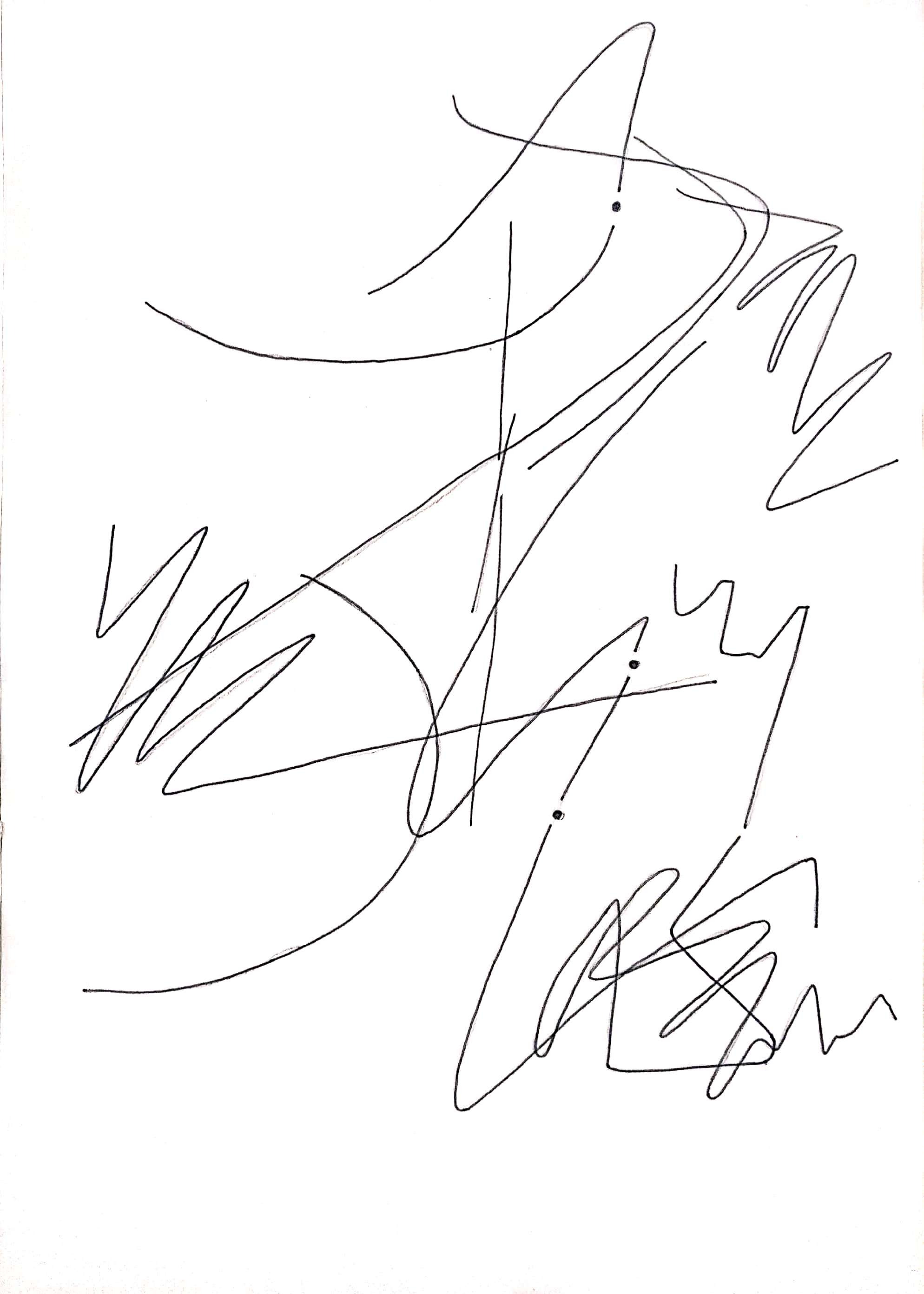
Lately, I’ve been listening more closely to the unnoticed sounds that surround us, the music of the mundane. The rhythm of leaves rustling in wind, the blink between thoughts, the tonal warmth of early morning light. These subtle phenomena carry their own choreography. In one drawing, I translated the breath-like motion of leaves through the structured harmony of De Stijl, inspired by Piet Mondrian’s pursuit of balance between the organic and the rational. The piece became a score for the senses, a map of quiet, rhythmic life often left unheard.
My practice is deeply rooted in intuition. Over the past eight years, and more intensively in the last three; I’ve developed a ritualistic approach to drawing, led not by a fixed concept, but by the embodied experience of making. This instinctive flow echoes Maurice Merleau-Ponty’s philosophy of perception: the body is not merely a vessel but an active site of knowing. In this sense, my hand thinks, feels, and remembers. Each layer, each mark, reveals the emotional architecture beneath the surface, much like an orchestral crescendo building from silence. The process is not linear, but cyclical, iterative and reflective, like the spiral of a breath or a memory re-entering the body.
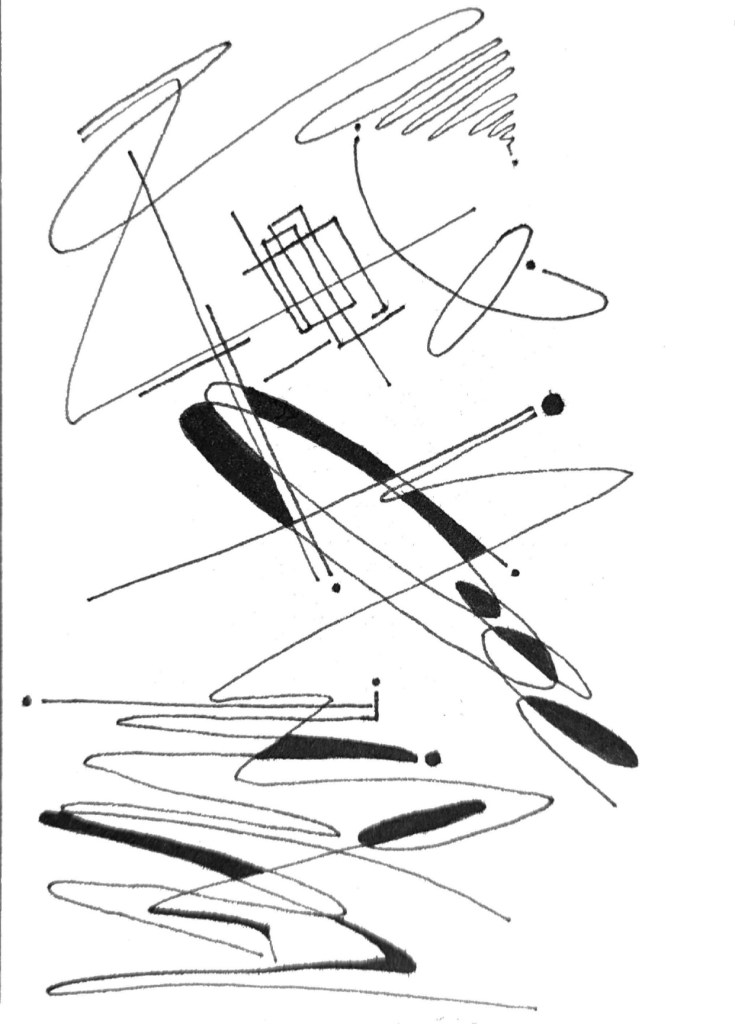

As viewers, we are not meant to decode a fixed narrative, but to participate in the rhythm of the piece , ‘to perceive ourselves perceiving’. This mirrors the thoughts of philosopher John Dewey, who argued that art is not a thing but an experience. My drawings invite that experience: a space for improvisation and self-reflection, much like a dancer finding meaning within the constraints of music. There is no singular reading, only an unfolding.
These works are, above all, an offering. A quiet collaboration. They do not claim authority or resolution, but extend an invitation to engage with the subtleties of lived experience. In the dance between tension and release, between silence and stroke, perhaps one might feel something beyond the visual, something like the pulse of life itself.
 DichoLab