NDSM, Amsterdam
Theatre Kikker, Utrecht
Het Huis, Utrecht
How do we experience time?
This immersive project interrogates the elusive nature of time by exploring whether our temporal perception diverges between physical and mental realms. By fusing active participation, spatial scenography, short narrative movie, and a dynamic soundscape, the installation ignites introspection and dialogue about time’s subjectivity, challenging conventional notions of uniformity.
During my artist residency, I conducted comprehensive surveys and crafted a personal narrative recording my voice, choreographing lighting in sync with music, and producing a film that interweaves visuals with narrative. This approach not only redefines how physical settings and cognitive processes coalesce to shape our temporal realities, but it also transforms the experience into a potent, experiential inquiry. In doing so, it creates a compelling dialogue between art, science, and lived experience, urging audiences to engage actively with the unfolding mystery of time and, ultimately, to reconsider the fabric of their own temporal existence.
Please watch the video here:
https://www.youtube.com/watch?v=u-a0dAdnVZE
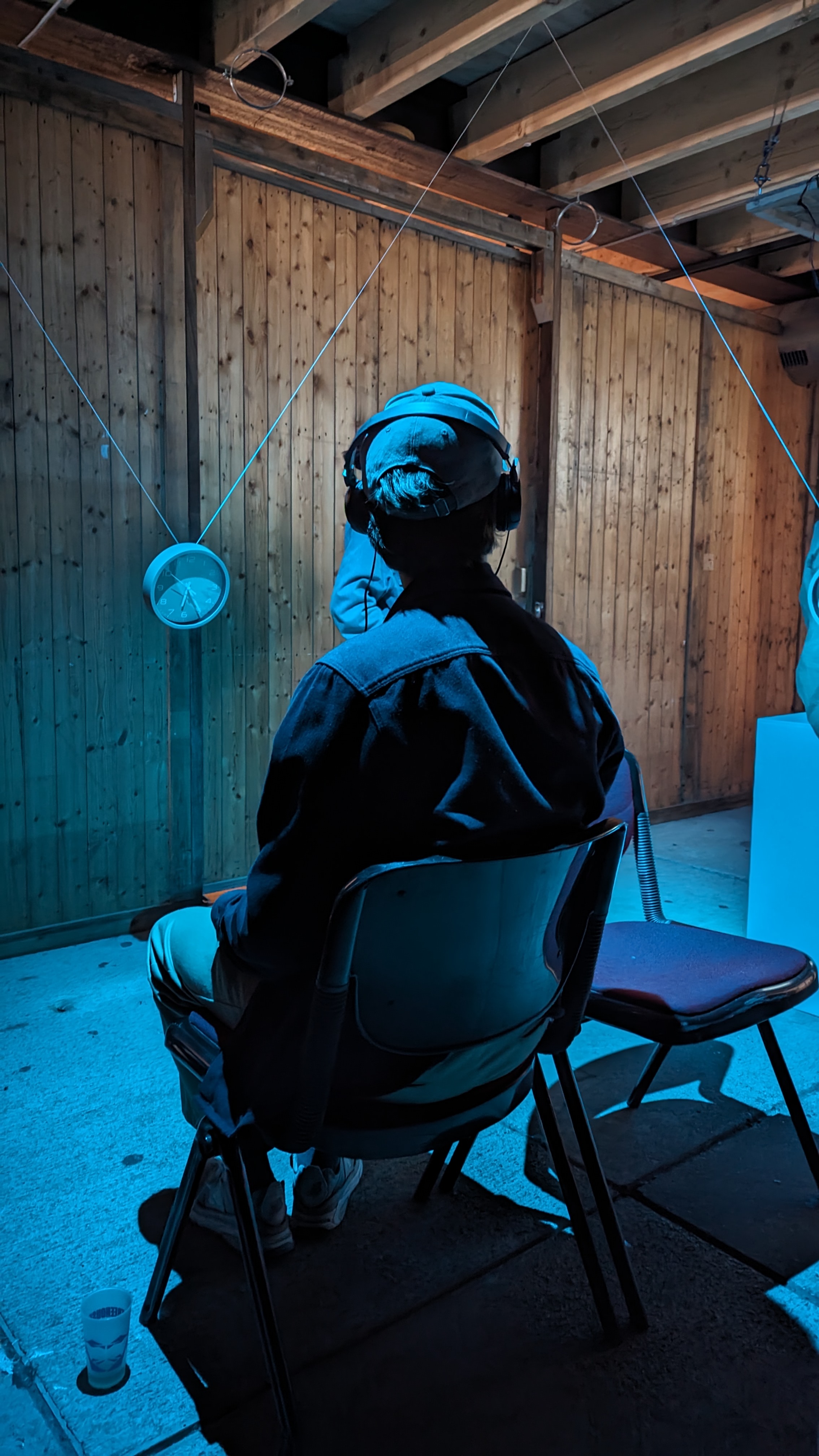
Here the spectator sits for five minutes, listening solely to the relentless ticking of a clock. In this minimalist setting, the sound transforms into a mirror reflecting the spectrum of human emotion provoking anxiety, disturbance, calm, or deep relaxation. This deliberate exposure to the raw passage of time compels individuals to confront their inner rhythms, challenging habitual sensory distractions and forcing a critical, introspective dialogue with the self. Such an experience not only questions our conventional understanding of time as a mere metric but also strategically exposes how subtle auditory stimuli can recalibrate our psychological state and social conditioning, ultimately redefining our relationship with the present moment.
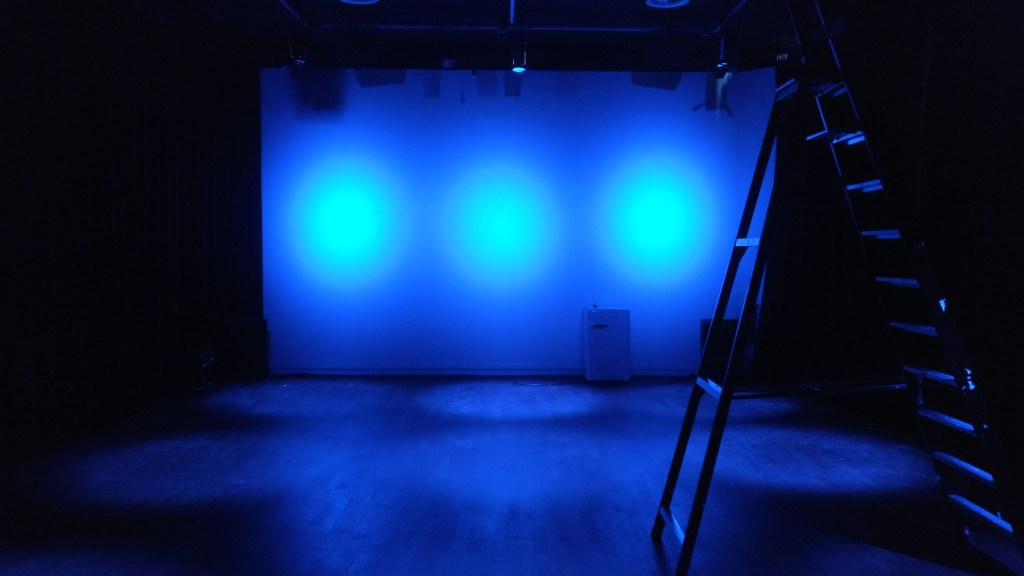
This immersive light experience interrogates the duality of temporal perception. It challenges conventional time constructs by inviting participants to engage deeply with their own subjective experiences, revealing how physical environments and cognitive processes intertwine to shape our understanding of time. In doing so, it ignites critical dialogue and introspection, redefining
temporal reality as a fluid, experiential phenomenon rather than a fixed metric.
 DichoLab